
Predicting the Unseen: The Power of Early Pest Detection
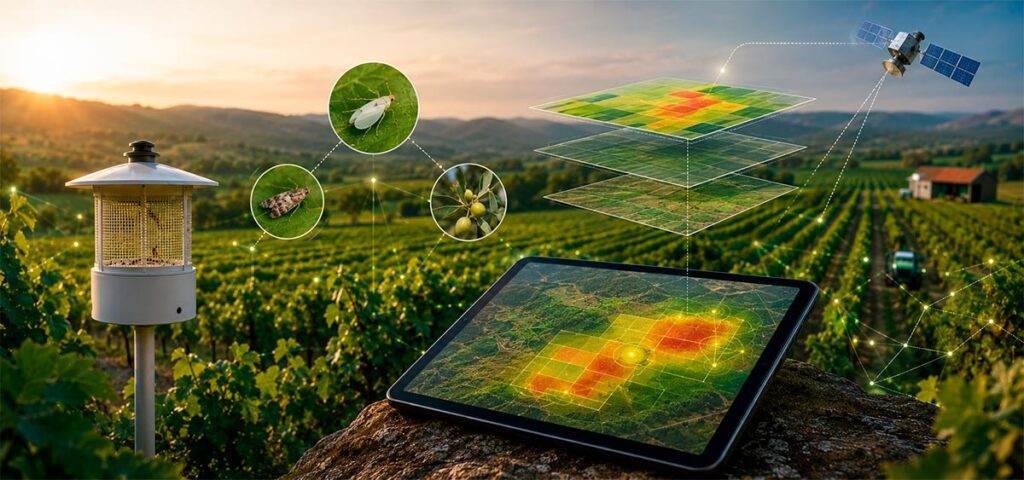
Pest monitoring is one of the most important tasks in modern agriculture—and also one of the most challenging. Farmers must constantly watch for insects that can damage crops long before any visible symptoms appear in the field. Traditionally, this monitoring relies on manual inspections: technicians visit fields, check traps and count insects captured over several […]
Predicting the Next Generation: How CERBERUS Uses Temperature to Stay Ahead of Lobesia botrana
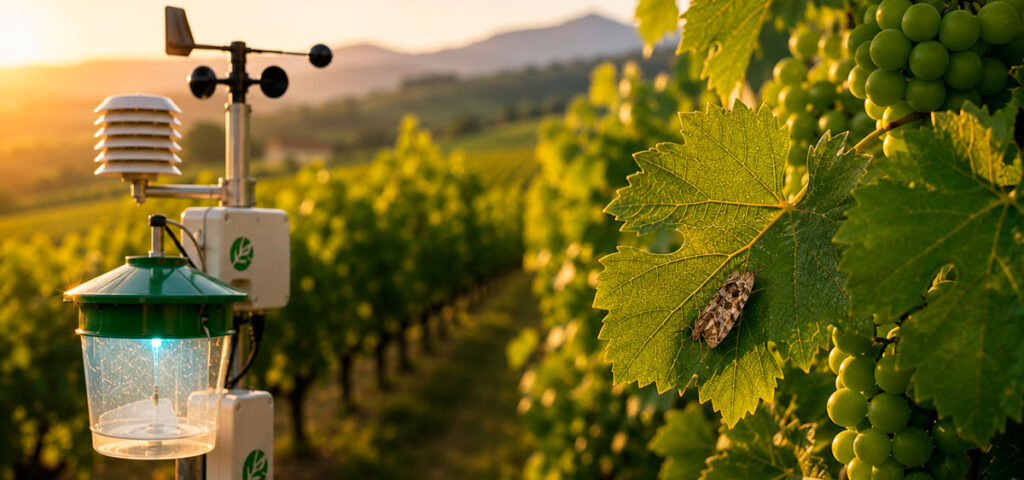
For vineyard growers, timing is everything. A treatment applied too early may have little effect. A treatment applied too late may allow an entire generation of pests to establish itself before any action is taken. This is why professional pest management has long relied on a concept known as thermal accumulation, also referred to as […]
Discover the CERBERUS Platform: Technology and Knowledge at the Service of Farmers
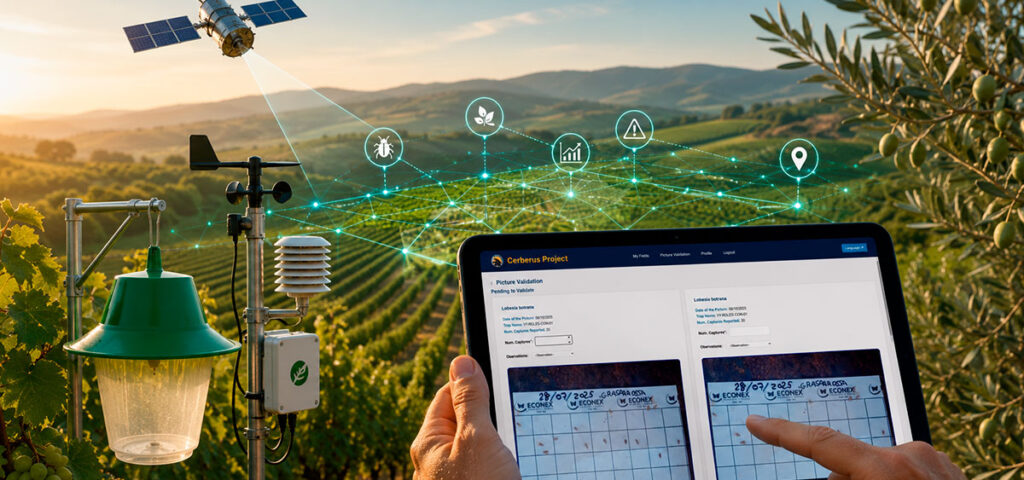
Monitoring agricultural pests has always been a complex and demanding task. Traditionally, farmers and technicians must visit fields regularly to inspect traps, identify insects and estimate pest populations. These visits are time-consuming and costly, and they only provide a partial picture of what is happening in the crop. Project CERBERUS aims to change this paradigm […]
Understanding Pest Monitoring Data: A Guide to the CERBERUS Analytics Module
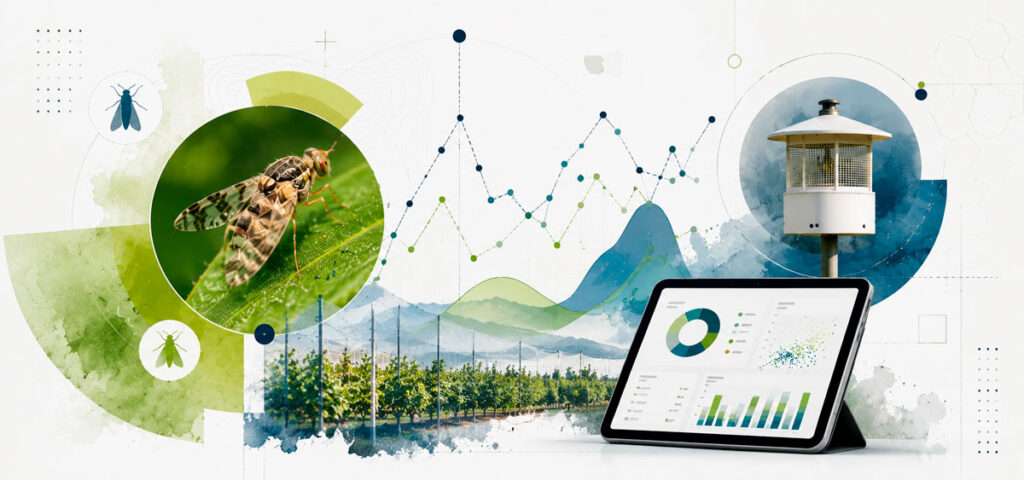
One of the biggest challenges in agricultural innovation is not developing new technology—it is proving that it works. For decades, pest monitoring has relied on conventional traps that are inspected periodically by technicians. These methods remain essential and provide valuable information, but they also require significant time and effort to collect, process and interpret data. […]
Capturing the Spread: How CERBERUS Monitors Xylella fastidiosa Vectors
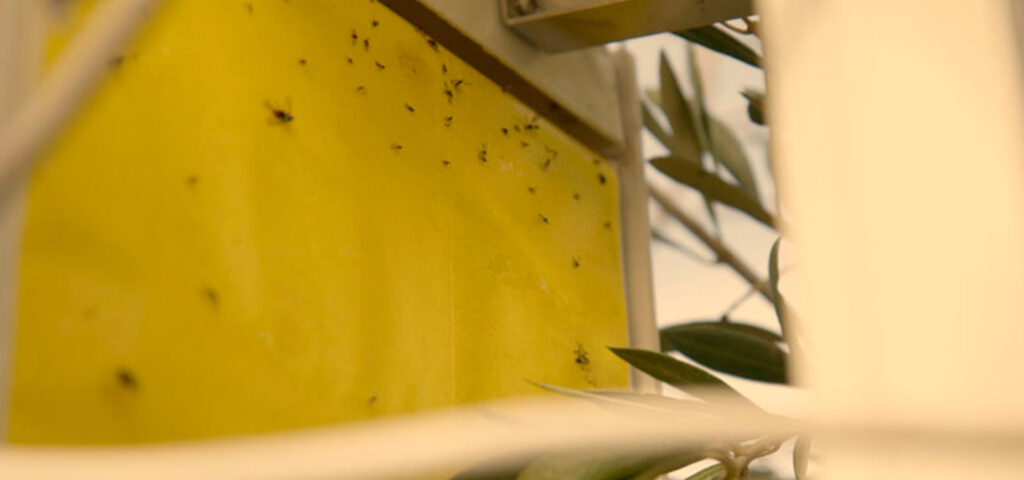
Understanding how plant diseases spread is just as important as detecting them. In the case of Xylella fastidiosa, monitoring insect vectors is essential to assess the risk of transmission within agricultural systems. CERBERUS uses a sweep-netting methodology to capture potential vectors in olive plots. Technicians move through the field performing systematic sweeps over vegetation cover […]
Olive Monitoring: How CERBERUS Detects Xylella fastidiosa in the Field
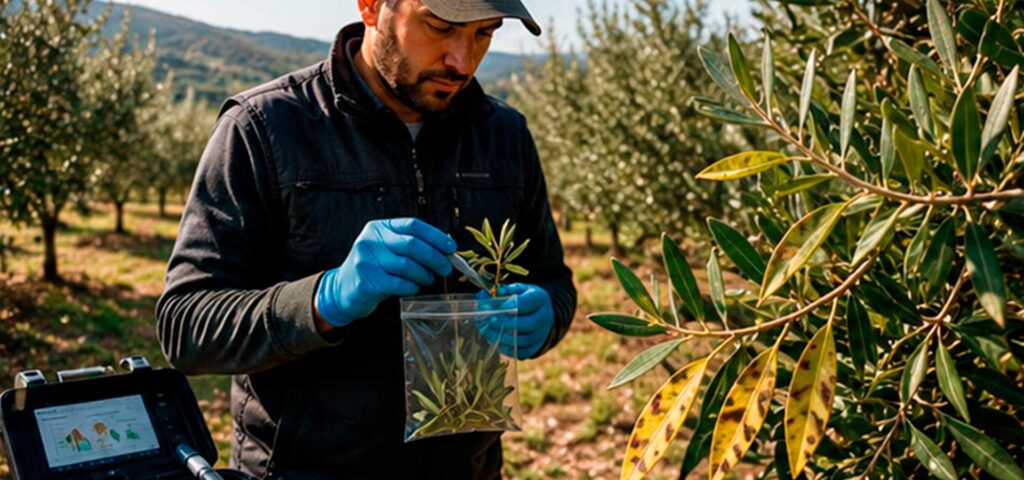
Detecting plant diseases such as Xylella fastidiosa requires a different approach from insect monitoring. Instead of counting individuals, field technicians must identify symptoms and collect plant material for laboratory analysis. Within CERBERUS, this process follows a strict protocol to ensure that samples are reliable and traceable. Technicians walk through olive plots, carefully inspecting trees for […]
Citrus Pest Monitoring: How Ceratitis capitata Is Counted in the Laboratory
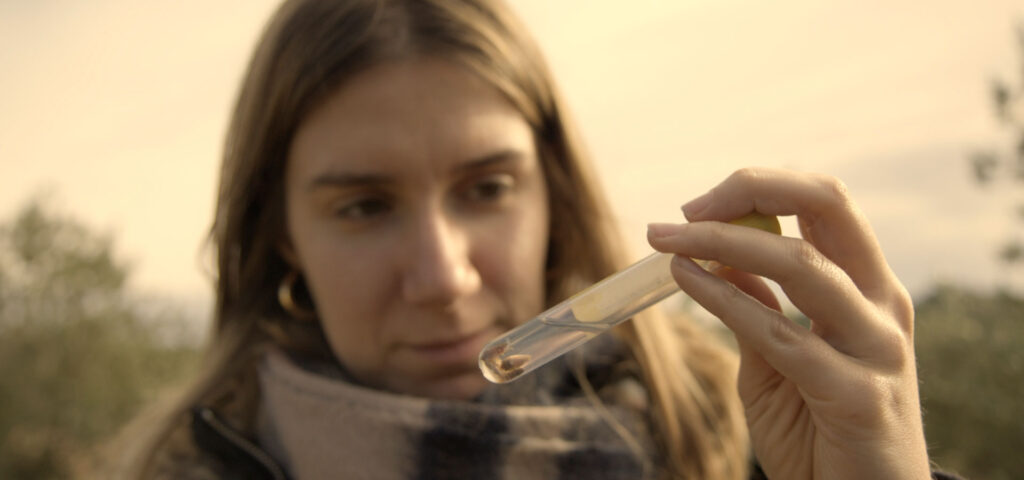
Monitoring Ceratitis capitata, one of the most damaging pests in citrus production, does not end in the field. While traps capture insects in orchards, it is in the laboratory where those captures are transformed into reliable data that support pest management decisions. Within Project CERBERUS, a standardized methodology ensures that each sample is processed consistently, […]
From Field to Lab: How CERBERUS Standardises Pest and Disease Monitoring in Mediterranean Crops

Effective pest and disease monitoring in agriculture depends on one key factor: data quality. Every decision—whether to intervene, where to act or how much to apply—relies on the accuracy of the information collected in the field and processed in the laboratory. Within Project CERBERUS, this process is not left to chance. From citrus pest counting […]
Targeting the Invisible Enemy: The Pests Monitored by CERBERUS in Mediterranean Crops

Agricultural pest monitoring is one of the most essential—and most challenging—tasks in modern crop protection. Farmers must constantly track insect populations that can damage crops long before visible symptoms appear. Traditionally, this work has relied on manual inspections: technicians visit fields, check traps and count insects one by one. Although this approach has been widely […]
ADVANCES ON AUTOMATED PEST TRACKING. TRAP ADAPTATION USED FOR THE PESTS TARGETED IN CERBERUS PROJECT
SUMMARY FOR PRACTITIONERS ON THE MAIN FINDING(S)/INNOVATIVE SOLUTION(S): Objective: Propose and field-validate the smart trap designs to attract and automatically detect the pest species targeted in Cerberus for olives, vineyards and citrus. Results (and practical recommendations): Several advances have been proposed and tested to attract and detect different target species.Meadow spittlebug (Philaenus spumarius principal vector […]