SUMMARY FOR PRACTITIONERS ON THE MAIN FINDING(S)/INNOVATIVE SOLUTION(S):
Objective:
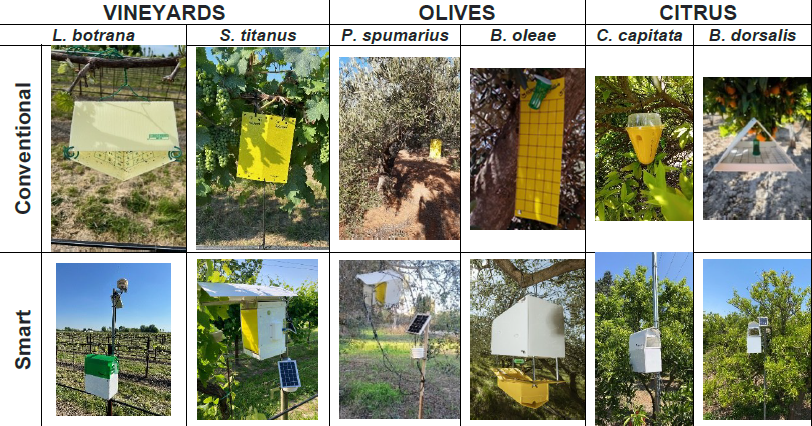
Propose and field-validate the smart trap designs to attract and automatically detect the pest species targeted in Cerberus for olives, vineyards and citrus.
Results (and practical recommendations):
Several advances have been proposed and tested to attract and detect different target species.
Meadow spittlebug (Philaenus spumarius principal vector for Xylella fastidiosa)
Remote automated monitoring solutions for the meadow spittlebug are not yet commercially available. Manual methods like sweep nets, branch shaking, stem taping, and yellow sticky traps are commonly used. A proposed solution involves using a trap with yellow sticky paper (cleanable remotely) and a high-resolution camera for improved monitoring.
Olive fruit fly (Bactrocera oleae)
The wide variety of conventional traps and lures available on the market suggests that there is currently no simple or universally standardized solution for monitoring this pest. A monitoring system has been prepared for use with solid attractants, such as rubber pheromone dispensers.
European grapevine moth (Lobesia botrana)
A modified trap model with horizontal barriers to prevent bird entry has been recommended. It has proven effective in various crops, pests, conditions, and geographies, particularly in catching smaller pest insects like L. botrana and Cydia pomonella.
American grapevine leafhopper (Scaphoideus titanus)
A trap model has been developed recently as a simulation of yellow sticky panel, which is a usual conventional tool for monitoring S. titanus. Action thresholds should be set based on the number of pests per sticky area, as panel size significantly affects catch numbers.
Mediterranean fruit fly (Ceratitis capitata) and Oriental fruit fly (Bactrocera dorsalis)
A modified trap model with an open entrance and white housing, simulating white delta (Jackson type) traps, has been recommended. It is designed to use solid attractants such as rubber pheromone dispensers or gel.
ADDITIONAL INFORMATION:
Figure 1. Comparison between smart traps and conventional traps for Lobesia botrana (a) and Ceratitis capitata
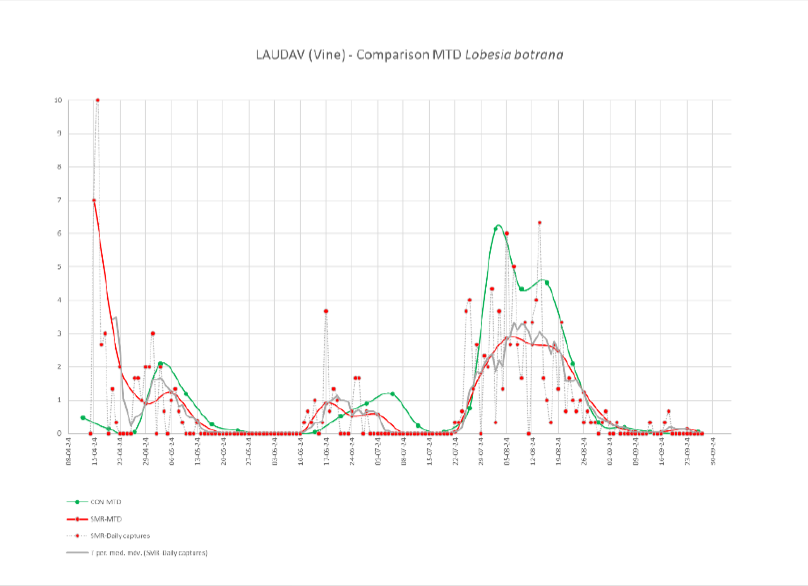
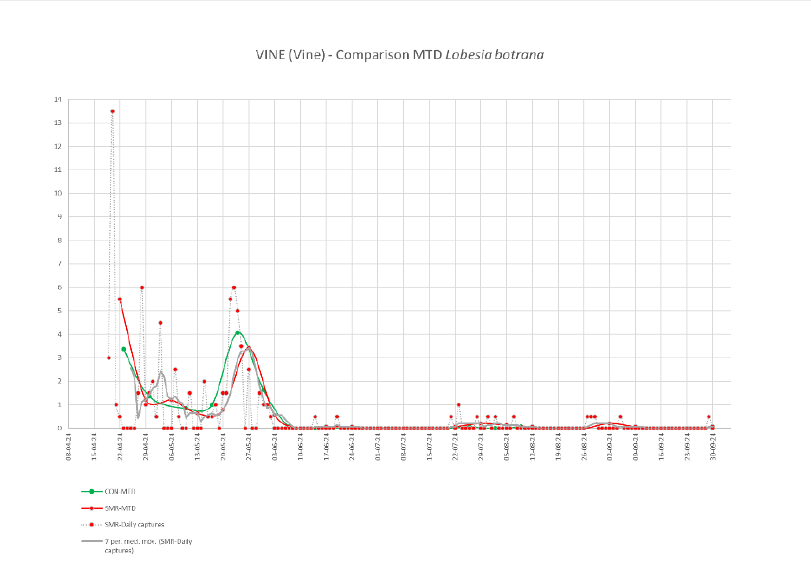
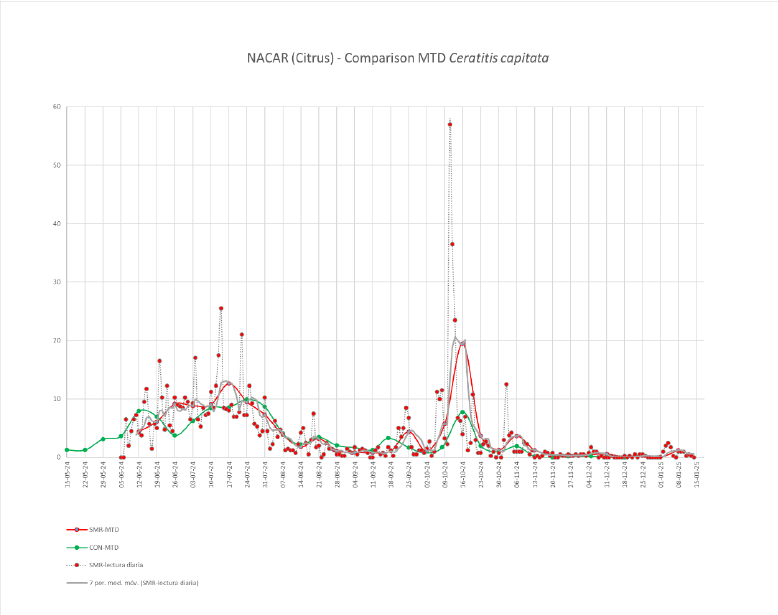
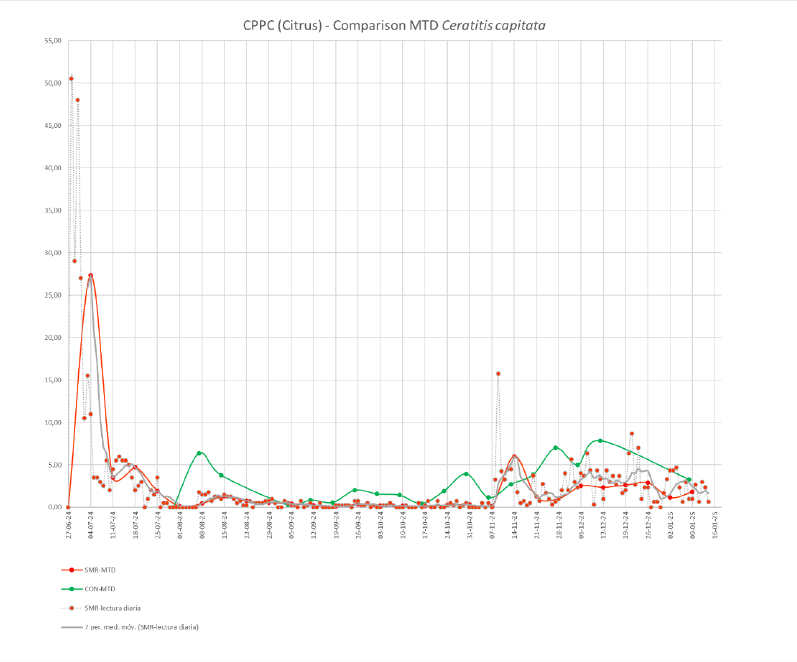
Table 1. Smart and conventional traps (for ground-truth comparison) used in Cerberus