
News
CERBERUS Smart Sprayer Takes to the Field: Initial Prototype Trial Launched in Cyprus
Limassol, Cyprus (October 2026)
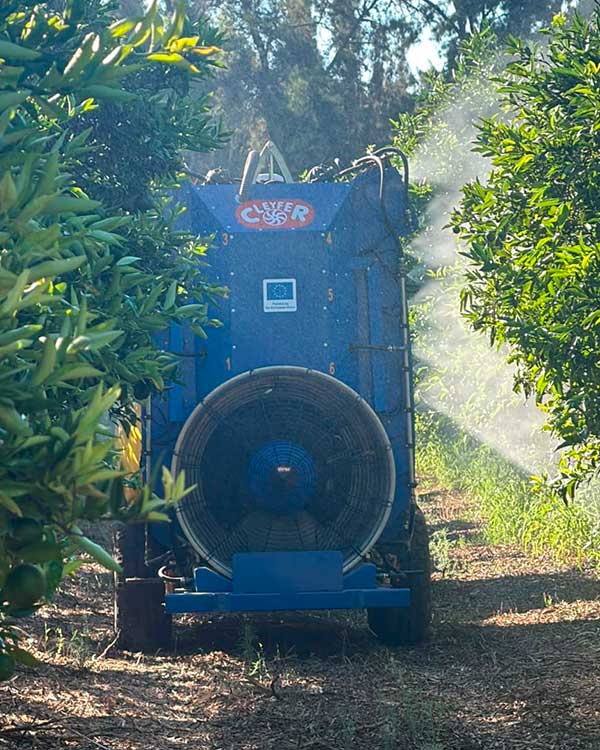
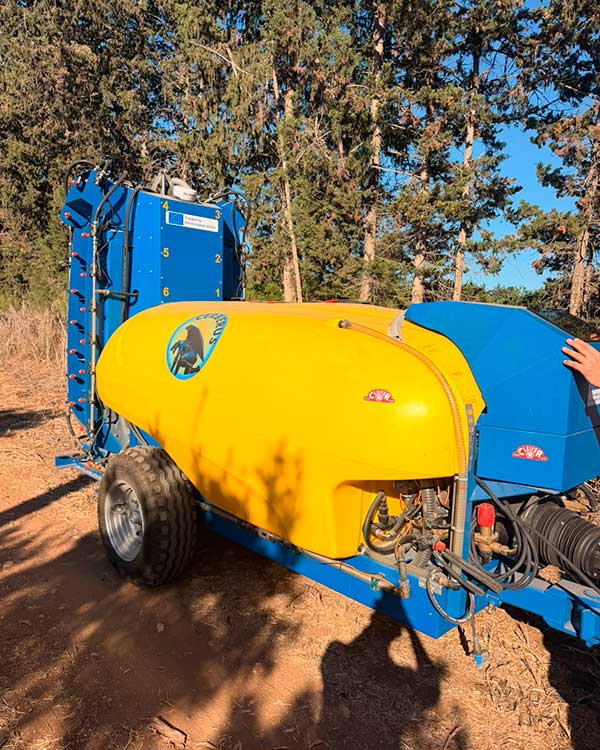
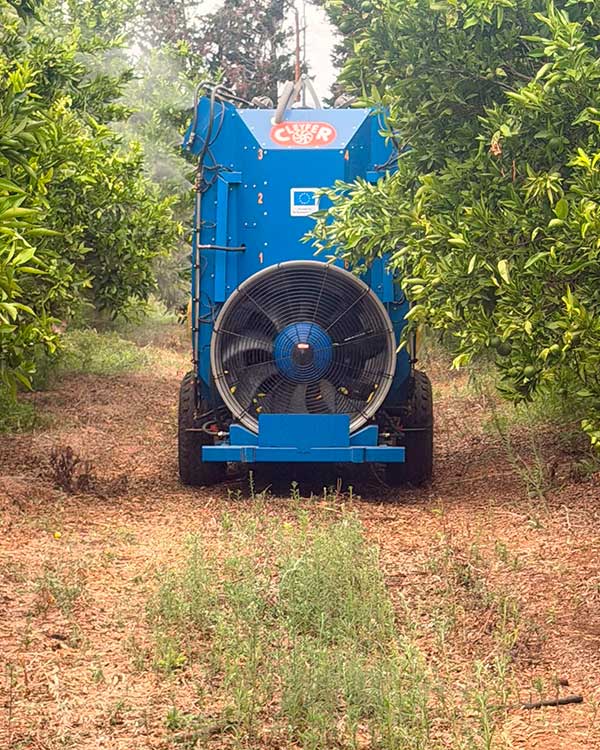
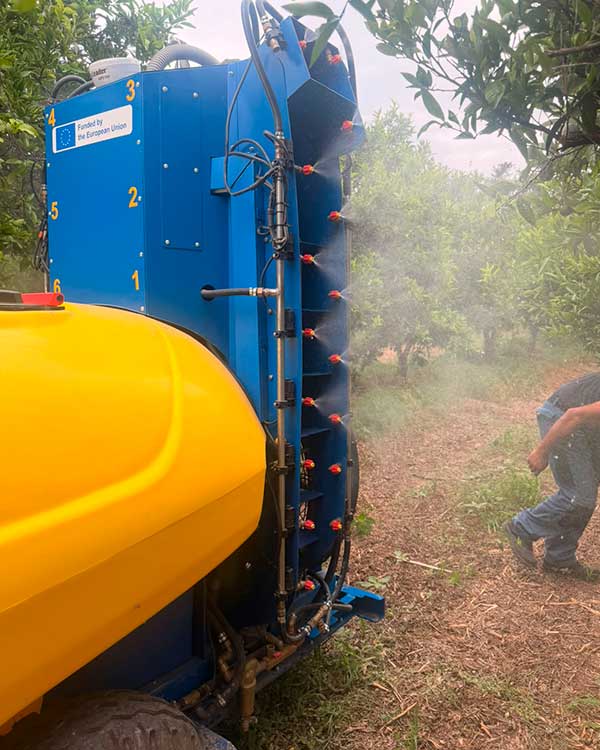
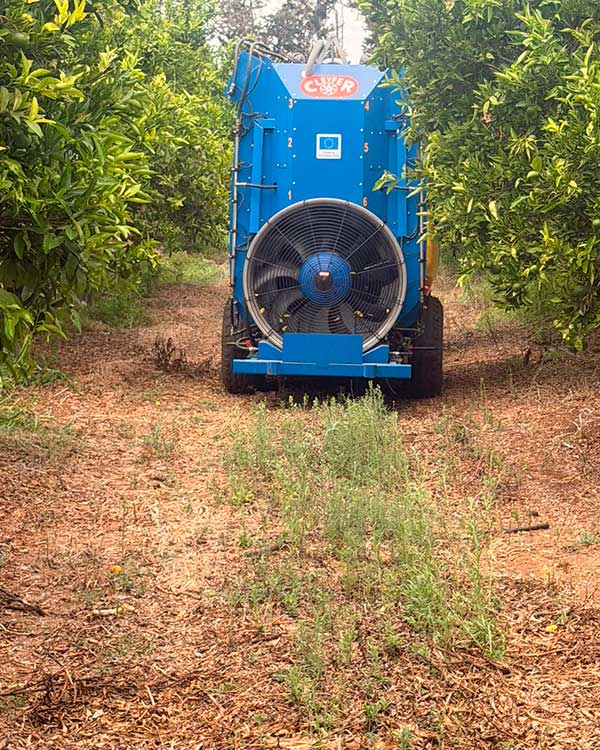
The CERBERUS project has reached an important operational step in its development roadmap. Following the delivery and setup of the CERBERUS smart sprayer prototype at The Cyprus Phassouri Plantations Co. Ltd. (CPPC), the system has officially begun its first real-world field trials in citrus orchards.
Translating Digital Maps into Field Execution
This initial test represents the first live field run of the CERBERUS variable-rate spraying architecture under actual orchard conditions.
During this setup phase, the machinery was loaded with a newly developed 5-dose prescription map. The primary focus of this first campaign was to verify the communication between the control unit and the spraying mechanism, testing the equipment’s ability to adjust spray levels according to pre-defined management zones in real time.
The Objective Behind Multi-Dose Spraying
In Mediterranean perennial crops like citrus, traditional treatments are applied uniformly across the entire parcel. The CERBERUS project aims to replace this method with dynamic, targeted application.
By testing a 5-dose variable approach in real agricultural conditions, the project seeks to evaluate how multi-zone prescription maps can help:
- Optimize input usage by tailoring spray volumes to specific canopy or management needs.
- Support sustainable management by limiting unnecessary chemical application in lower-density zones.
- Test operational feasibility for farmers integrating smart machinery into daily routines.
Ongoing Data Processing and What’s Next
Field teams and technical researchers are currently gathering and processing the operational data and feedback from this initial run in Cyprus. These insights will be essential for validating the prototype’s performance, fine-tuning the spraying response, and refining the underlying algorithms.
CERBERUS and HYDRA-EO Join Forces for Ground-Truthing in Bologna Vineyards
Bologna (September 2026)
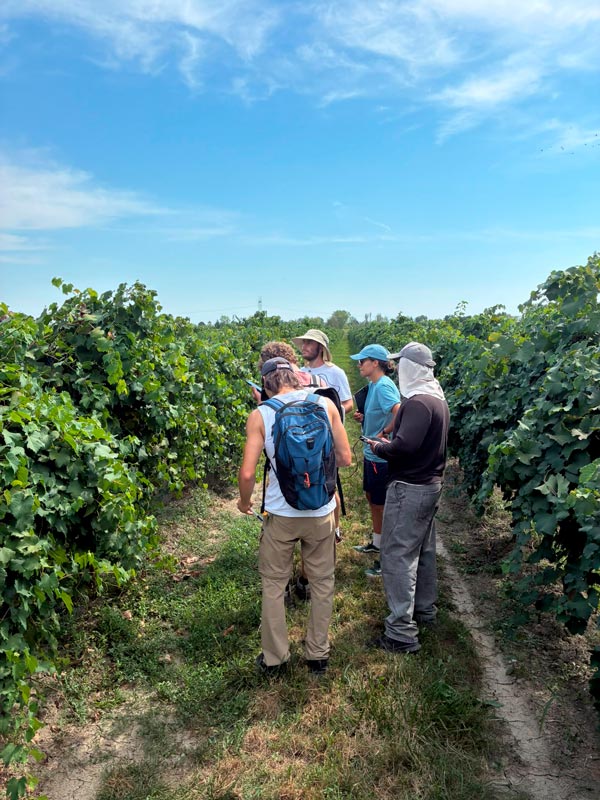
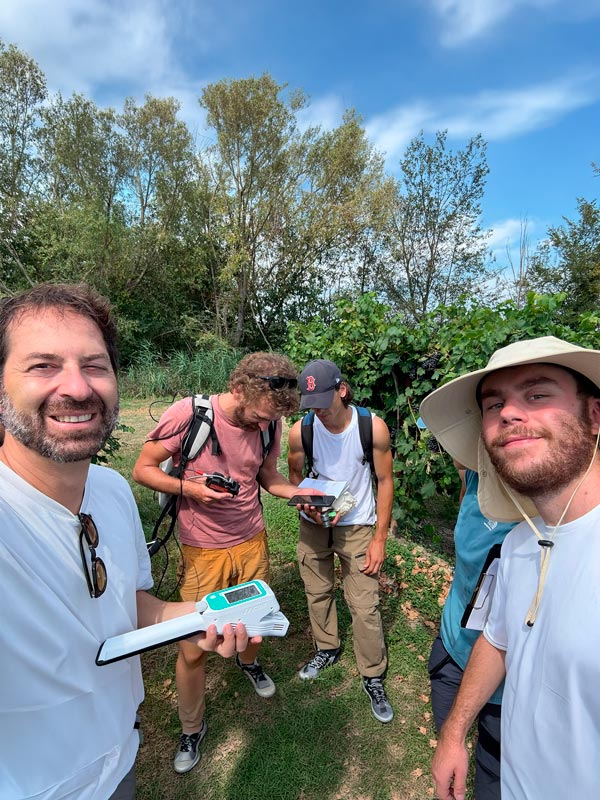
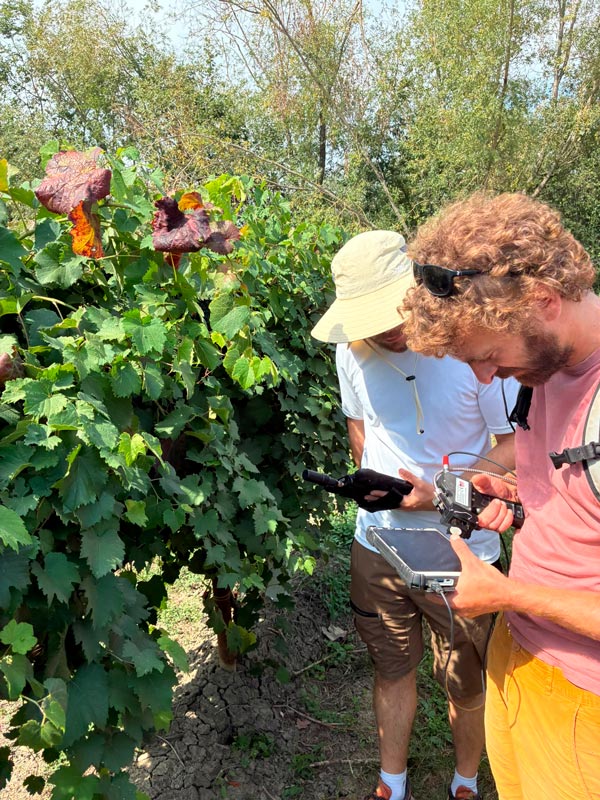
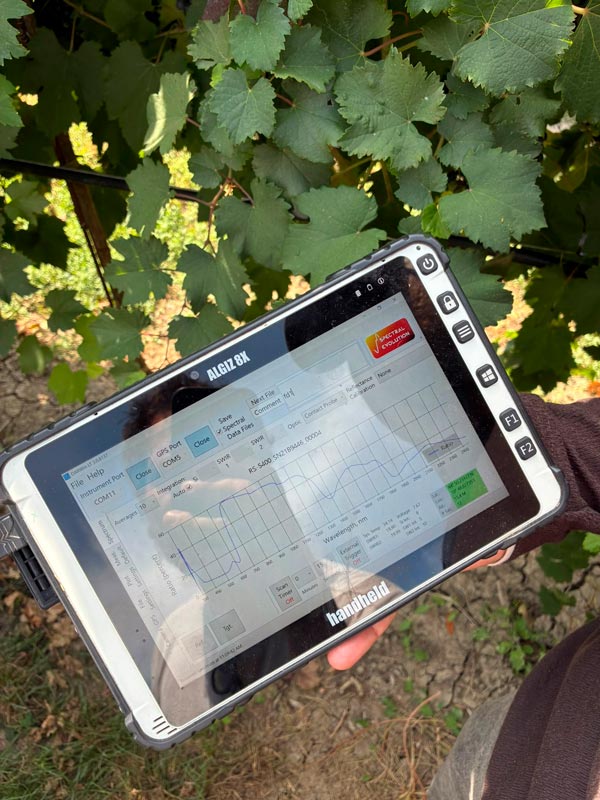
CERBERUS has taken a new step in European collaboration this September, teaming up with the HYDRA-EO project for a joint field campaign in vineyards near Bologna, Italy.
The partnership between CERBERUS and HYDRA-EO was born out of joint sessions with the European Space Agency (ESA) in Frascati, where both projects found common ground in multi-level analysis for crop monitoring. By combining multispectral cameras, thermal imaging, spectroradiometers, and hyperspectral sensors, the two projects share a common goal: detecting early signs of biotic stress in vineyards, with a particular focus on Flavescence dorée, and distinguishing it from other stress sources, such as heat or water stress.
On 2 September 2026, a joint field team from CNR-IBE (Institute of BioEconomy, Italian National Research Council) and the Department of Agricultural and Food Sciences at the University of Bologna carried out ground measurements in CERBERUS’s vineyards near Bologna. The campaign combined spectroradiometer readings, SPAD (leaf chlorophyll) measurements, and visual disease inspection on both symptomatic and asymptomatic leaves.
This ground-truthing work adds another data point to the Flavescence dorée time series and supports the interpretation of the airborne hyperspectral and thermal data collected over the same sites, helping bridge the gap between remote sensing observations and what is happening on the ground.
Collaborations like this one are central to CERBERUS’s approach: pushing pest and disease detection methods to be tested and validated under real disease-management conditions, and bringing the project closer to more accurate, scalable monitoring across Mediterranean crops.
The project continues to expand its network of collaborations across vineyard, olive grove, and citrus pilot sites, working toward more sustainable, resilient crop protection strategies for Mediterranean agriculture.
CERBERUS Research Presented at IHC2026
Kyoto (September 2026)
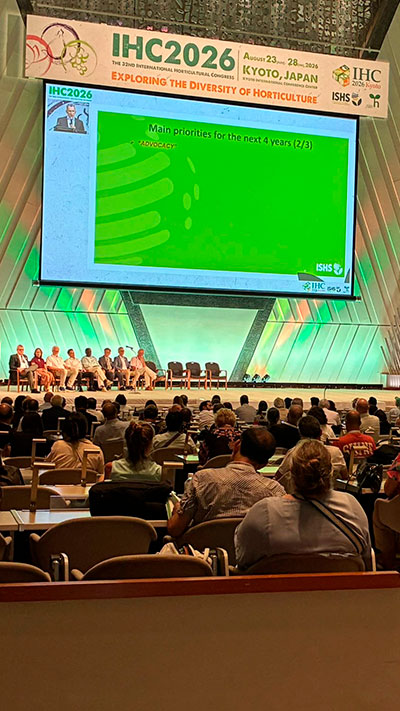
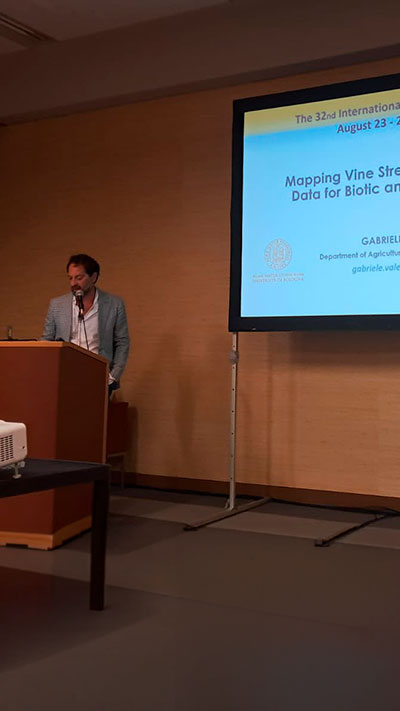


CERBERUS took its precision viticulture research to the international stage this August, with project researcher Gabriele Valentini presenting at the 32nd International Horticultural Congress (IHC2026), held in Kyoto, Japan, from August 23–28, 2026.
Valentini, from the Department of Agricultural and Food Sciences (DISTAL) at the University of Bologna, delivered the presentation “Mapping Vine Stress: Integrating Satellite Data for Biotic and Abiotic Assessment” as part of the Symposium on Advances in Grapevine Genetics and Physiology: Innovation and Adaptation for the Next-Generation Resilient Viticulture, one of the congress’s key sessions on the future of sustainable viticulture.
The presentation showcased how CERBERUS applies satellite data in agriculture to map stress in vineyards, distinguishing between biotic sources, such as pest and disease pressure, and abiotic ones, including drought and heat stress. This capability is central to the project’s broader goal: enabling predictive pest management that shifts crop protection from reactive to proactive, allowing growers to identify risks before visible damage occurs in the field.
IHC2026 brought together leading researchers, practitioners, and industry representatives from around the world to exchange knowledge across horticultural science. For CERBERUS, presenting at this forum offered an opportunity to share findings from its Mediterranean pilot sites with a global audience and reinforce the relevance of predictive, data-driven approaches to viticulture.
The project continues to validate its technologies across vineyard, olive grove, and citrus pilot sites, working toward more sustainable, resilient crop protection strategies for Mediterranean agriculture.
A new CERBERUS prototype has just arrived.
Cyprus (July 2026)
What looks like a machine wrapped in black plastic is actually years of research, engineering and innovation.
After months of development, the CERBERUS smart sprayer has safely reached our pilot site at The Cyprus Phassouri Plantations Co. Ltd. (CPPC).
Now comes the most exciting part.
Every prototype has a journey.
This one starts here.
CERBERUS Showcases Smart Spraying Innovations at the CIGR-EurAgEng World Congress
Torino, Italy (June 2026)

The CERBERUS Project was presented at the CIGR-EurAgEng World Congress, one of the world’s leading events in agricultural engineering, bringing together researchers, technology developers and industry experts working on the future of sustainable agriculture.
During the congress, Francisco Rovira, from the Universitat Politècnica de València (UPV) and coordinator of CERBERUS, presented the latest progress achieved by the project in the field of precision crop protection.
The presentation focused on how CERBERUS integrates smart monitoring technologies, AI-powered decision support and precision spraying to help farmers detect pest outbreaks earlier while reducing unnecessary pesticide applications.
One of the highlights of the session was the presentation of the first operational results obtained in the Italian pilot vineyard, where the CERBERUS smart sprayer has successfully moved beyond controlled testing into real farming conditions. The system enables operators to work autonomously by following prescription maps generated from field monitoring data, recording operational information and integrating it directly into the CERBERUS digital platform.
This milestone demonstrates how research developed within Horizon Europe projects can be translated into practical tools that support growers in their day-to-day decision-making.
The congress also provided an opportunity to exchange knowledge with the international agricultural engineering community, discuss the future of digital crop protection and strengthen collaboration between researchers, technology providers and end users.
As CERBERUS continues validating its technologies across pilot sites in Italy, Spain and Cyprus, participation in international scientific events such as the CIGR-EurAgEng World Congress plays a key role in accelerating innovation transfer and fostering collaboration across Europe.
CERBERUS at EFSA
Shaping the future of plant pest surveillance


From Mediterranean crops to the European plant health agenda.
This week, CERBERUS participated in the 7th EFSA Plant Pest Surveillance Network Meeting, organised by EFSA (European Food Safety Authority) where researchers, policymakers and Horizon Europe projects came together to discuss the future of plant pest surveillance in Europe.
During the workshop on synergies between Horizon Europe projects and the EFSA Network, the CERBERUS team presented its approach to multi-source pest surveillance, combining smart traps, satellite observations, field monitoring, artificial intelligence, citizen science and precision spraying technologies into a single decision-support system.
The presentation showcased how CERBERUS connects data from the field, laboratories, remote sensing platforms and end users to support earlier pest detection, smarter interventions and more sustainable crop protection strategies across Mediterranean vineyards, olive groves and citrus orchards.
The event was an excellent opportunity to exchange knowledge with fellow Horizon Europe initiatives, explore future collaborations and contribute to ongoing discussions on the future of plant health surveillance in Europe.
First real CERBERUS treatment in Italy
Rio Saliceto, Italy (April 2026)
In the pilot vineyard in Río Saliceto, the CERBERUS smart sprayer has completed its first full treatment under real conditions.
For the first time, a partner has:
- Applied a full prescription map
- Operated the system without external assistance
- Recorded all operational data for platform integration
This marks a key transition: from controlled testing to real use by non-expert users in the field.
A clear step forward towards the adoption of advanced crop protection technologies in everyday farming.
CERBERUS Agronomy Days 2025 Held in Bologna with Stakeholders, Partners and Field Demonstrations
Bologna (December 2025)
The CERBERUS Agronomy Days 2025 were held in Bologna, bringing together project partners, stakeholders and members of the Advisory Board for three days of technical exchange, strategic discussion and field-based demonstrations. The event was hosted with the support of Alma Mater Studiorum – Università di Bologna, reinforcing the strong link between research, innovation and practical implementation that defines the CERBERUS approach.
During the Agronomy Days, the consortium presented the main results achieved throughout 2025, focusing on progress across the project’s core components: remote and proximal sensing, insect monitoring, data integration within the CERBERUS cloud platform, and active crop protection solutions. Dedicated sessions allowed partners to align on technical developments, validate methodological choices, and discuss the next implementation steps across pilot sites.
A key highlight of the event was the live field demonstration of the CERBERUS smart sprayer, where participants were able to observe the system operating under real agricultural conditions. The demonstration showcased how data-driven decision support, intelligent spraying technologies and sensor-based control are being combined to improve precision, efficiency and sustainability in crop protection practices.
Beyond the technical programme, the Agronomy Days also served as a collaborative forum to strengthen coordination between research institutions, technology providers, growers, and public authorities involved in the project. Discussions addressed user needs, operational constraints, and pathways for scaling up CERBERUS solutions across different crops and Mediterranean contexts.
The outcomes of the Agronomy Days will directly inform the next phase of the project, including the replication and validation of technologies across pilot sites in multiple countries. The accompanying video captures key moments from the event, highlighting both the technical content and the collaborative spirit that underpins CERBERUS’ multi-actor approach.
Tech that saves time and protects crops
William Watson explains about that (December 2025)
William Watson from Naranjas del Carmen is testing one of our Smart Traps — part of the Cerberus_Project innovation toolkit.
- It’s a camera.
- It’s a weather station.
- It sends pest data to the cloud every day.
And it’s changing the way farmers make decisions. No more guesswork. No more wasted field visits. Just actionable insights, fast.
This is CERBERUS in action: bringing together IoT, satellites, robotics and AI to create sustainable crop protection.
Smart Spraying in Citrus
CERBERUS Field Test Update (November 2025)
Smart City Expo World Congress
Barcelona (November 2025)
From 4 to 6 November 2025, the CERBERUS Project was represented at the Smart City Expo World Congress in Barcelona, where our partner Science for Change showcased how citizen-generated data can strengthen evidence-based decision-making in both rural and urban environments.
Science for Change plays a key role in CERBERUS by leading the citizen science strategy, designing the tools and methodologies that allow farmers, technicians, and local communities to contribute valuable on-the-ground data. This information is then integrated with Earth observation imagery, smart trap data, and AI-driven analytics, ensuring that CERBERUS reflects real needs and real field conditions.
At Smart City Expo, Science for Change presented how this approach—combining Earth observation and citizen-generated data—extends beyond agriculture. The same co-created data flows can help cities identify local environmental challenges, monitor ecosystems, and develop policies that improve public services and citizens’ quality of life.
During her talk, Rosa Arias, CEO of Science for Change, emphasized the importance of co-creation between citizens, researchers, and policymakers. This collaboration ensures that innovation is both scientifically robust and socially meaningful, enabling CERBERUS to deliver solutions that empower communities, from Mediterranean fields to smart, data-driven cities.
Artificial Intelligence in Agriculture
Valencia (October 2025)


Project CERBERUS was presented yesterday at the Congress of Agro-Food Cooperatives of the Valencian Community, within the programme themed “Cooperatives: towards a profitable, sustainable and digital agriculture.” The session, led by Coral Ortiz (UPV) and titled Aplicaciones de IA en el campo, highlighted how Artificial Intelligence in Agriculture is being applied directly in field operations to improve crop health monitoring and decision-making. More than 450 professionals from the agri-food sector attended a programme addressing climate adaptation, market volatility, digitalisation, and generational renewal—priorities that align with the practical, deployable tools CERBERUS is bringing to cooperative technicians and farmers.
Within this context, Project CERBERUS showcased how its AI-driven, cloud-based platform integrates multi-source observations—satellite imagery, smart traps, robotics, and structured field reports—into a coherent data-to-decision pipeline. Machine-learning models detect early pest dynamics, prioritise scouting, and support targeted interventions, turning complex datasets into clear, time-bound actions that fit cooperative workflows. The result is faster and more accurate alerts, fewer unnecessary pesticide applications, optimised labour and input use, and stronger traceability for audits and compliance. By embedding explainable analytics and interoperability from the outset, CERBERUS advances Artificial Intelligence in Agriculture as a reliable, scalable solution that enhances productivity, sustainability, and resilience across Mediterranean vineyards, olive groves, and citrus plantations.
BIOBLITZ
Cyprus (June 2025)

A bioblitz educational workshop under the CERBERUS project was successfully held at CPPC in Limassol, Cyprus, co-organized by ECoE, SFC, CPPC, and the Department of Agriculture of Cyprus. The workshop aimed to train citizen scientists to monitor the Mediterranean fruit fly (Medfly), a serious agricultural pest.
Over 35 participants, including students, farmers, agronomists, and Ministry representative, attended. They learned about the Medfly’s life cycle, monitoring, and control methods. A monitoring kit by SFC was demonstrated and distributed to 20 participants, who will now contribute data to the CERBERUS platform.
This citizen-collected data will be integrated with satellite imagery, smart traps, and agricultural robots, highlighting the value of public involvement in agricultural research and pest management.
Session with STELLA and FORSAID
Spain (June 2025)

Last June, young researchers from the CERBERUS, Stella and FORSAID projects online networking session. Each researcher had 2–3 minutes and a single slide to present their specific work. From CERBERUS Pablo González presented the smart sprayer and prescription maps, while Cristina Asenjo presented the robot and its field functionalities. In addition, a researcher from Cyprus introduced her work on satellite-based research within the CERBERUS project.
The event served as a networking session involving the three projects working on the non-destructive monitoring and management of pests and diseases across the EU, using technologies such as satellites, in both the forestry and agri-food sectors.
VALIDATION of real data in Plugia for Xylella fastidiosa
Plugia, Italy (May 2025)

The validation of real data in Puglia for Xylella fastidiosa and its vector consisted of the following activities, carried out by UPV, GVA, and ECoE in collaboration with the IPSP-CNR (Institute for Sustainable Plant Protection) of Italy and the University of Bari, between May 12 and 19, 2025:
- Installation of three yellow sticky traps. Currently, no captures have been recorded in 2025.
- Sweeping to capture vectors on the vegetation cover. The presence of vectors was confirmed in the pilot plot.
- Sampling of symptomatic trees, which were analyzed in an official laboratory using molecular techniques.
- Verification of the correct installation of three smart traps. No vector captures have been recorded.
Olive fruit fly and Cerberus Platform
Spain (June 2025)

In the month of June, an informative session was held in Jérica (Castellón, Spain) about the olive fruit fly, Bactrocera oleae. The pest was identified using chromatic traps with the support of GVA-Tragsatec. During the session, pheromones and the phenological state of the olive crop were explained. A field demonstration was conducted on how to place traps and replace pheromones and local participants were trained.
CERBERUS platform was presented, and participants registered and learned how to input their data into the system, they were trained on how to input the number of olive fruit flies detected in the traps they would be monitoring during the campaign. They were also provided with the necessary materials for their monitoring work throughout the campaign (thread counter, several yellow traps, a monitoring kit, pheromones, etc.).
Focus groups on users needs
Spain (April 2024), Cyprus (June 2024) and Italy (July 2024)

Following the objectives set for the first six months, we organized three focus group encounters centered on specific crops: Olives in Valencia (Spain) on 23 April, citrus in Limassol (Cyprus) on 25 June and vineyards in Bologna (Italy) on 2 July. Each meeting involved a half-day session with around 30 stakeholders, engaged in a co-creation approach to define the key features of the virtual platform. This platform will be in the cloud and will serve as the portal to the Cerberus multi-platform system for crop protection. The participants were split in focused tables comprising small growers, farmer associations, professional spray applicators, government agencies, consultants, policymakers, researchers, farm equipment manufacturers, etc.
First insect traps set up in pilot vineyards
Italy and Cyprus, April 2024

LAUDAV (IT) and VINE (CY) have installed the first set of traps for monitoring Lobesia botrana. The images show the conventional traps with sticky paper (left) and the IoT traps developed by EFOS (SL) (right). Early catches have been reported in April. Next stages involve the installation of traps in the citrus and olive orchards.
Kick-off meeting

The project CERBERUS, MULTIPLATFORM FIELD SURVEILLANCE FOR INTEGRAL CROP HEALTH, EARLY DETECTION AND ACTUATION (HORIZON-CL6-2023-GOVERNANCE-01-16. HORIZON-RIA. Grant agreement: 101134878), just started.
On 30 January 2024, the partners of the project got together in the coordinator (UPV – Universitat Politècnica de València) facilities. They had a dynamic agenda including partners’ presentations, presentations about the tasks, planning, management…, ending with a visit to the fields owned by Naranjas del Carmen (NACAR), end-user partner.